
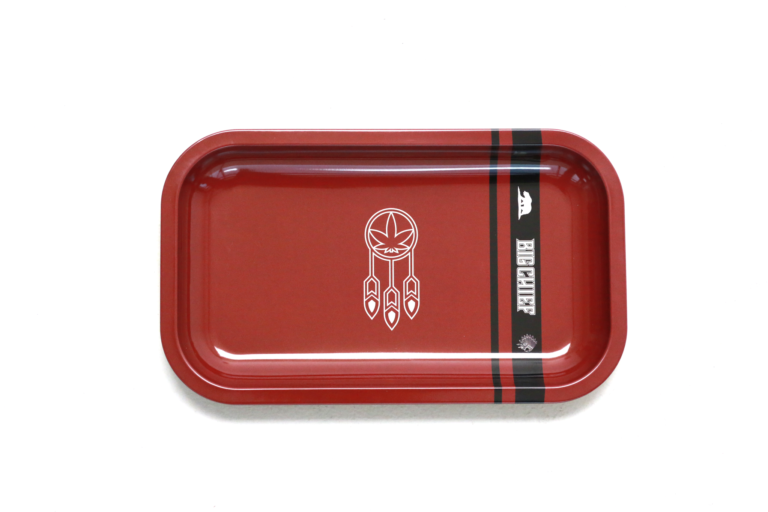
The official Big Chief rolling tray. A smooth, easy to clean metal surface with raised edges that keep your grind on the tray and off the table.
ROLLING TRAY
On this page
- The Big Chief Rolling Tray
- What a rolling tray is actually for
- Using one well
- What goes with it
- What makes a tray worth using
- A workflow that wastes less
- Adults only
- Rolling on a tray, step by step
- Papers, tips and what actually matters
- Fixing the four common problems
- Keeping the surface clean
- Building a complete setup
- Using a tray as a work surface, not storage
- Taking one out with you
The Big Chief Rolling Tray
Every roller eventually learns the same lesson: a dedicated tray saves flower, time and cleanup. The official Big Chief rolling tray gives you a smooth metal surface with raised, rounded edges, so ground flower stays put and slides cleanly into your paper instead of onto the floor. It wipes clean in seconds and the printed artwork holds up to daily use. Pair it with the Big Chief grinder and a jar from the flower collection and your rolling station is complete.
What a rolling tray is actually for
A tray sounds like an accessory you can do without until you have used one. Its job is containment: raised edges catch the material that would otherwise end up on a table, in a carpet or on the floor. Over a few months that adds up to a meaningful amount of flower that you paid for and did not use.
The secondary benefit is a clean, flat working surface. Rolling on a soft or textured surface is what produces loose, lumpy joints, because you cannot apply even pressure along the length.
Using one well
Keep the grinding at one end and the rolling at the other, so ground material does not get pushed around while you work. Tip the tray gently towards a corner when you have finished and everything collects in one place rather than being wiped off the edge.
Wipe it down with isopropyl alcohol every so often. Resin transfers from fingers to the tray surface and then back onto the next thing you roll, which affects both taste and how well papers stick.
What goes with it
A tray works alongside a grinder and a jar from the flower collection. Those three together are the complete setup for anyone rolling their own. If you would rather not, the pre roll packs cover the same strains with no preparation at all, and the cartridge range needs no accessories whatsoever.
How big is the tray?
It is a standard rolling tray sized for use on a lap or a table, large enough to grind and roll on without material escaping the edges.
How do I clean it?
Isopropyl alcohol on a cloth or paper towel removes resin transfer. Let it dry fully before using it again.
What makes a tray worth using
Three things separate a usable rolling tray from a decorative one. The first is the depth of the lip: too shallow and material still escapes when you tip it, too deep and you cannot get your hands in comfortably to roll. The second is the surface finish. A smooth, non porous surface releases resin when you wipe it; a textured or painted one holds onto it and gradually becomes tacky.
The third is the rounded corners. Square internal corners trap ground flower where you cannot sweep it out, and over months that is a real amount of material lost to a corner you can see but not reach.
A workflow that wastes less
Set the tray up the same way each time and you will lose noticeably less. Keep the jar and grinder at one end and roll at the other, so ground material is not pushed around while you work. Grind directly over the tray rather than beside it, since the transfer from grinder to surface is where most spillage happens.
When you finish, tip the tray towards one corner and everything gathers in a single place, ready to go back into the jar or into the next roll. Doing that consistently recovers a surprising amount over a few months.
Adults only
Everything prepared on a tray like this is intended for adults aged 21 and over. Store prepared material out of reach of children and pets, and do not drive after use. The CDC guidance on cannabis health effects sets out the general considerations.
What is the tray made of?
It is a rigid tray with raised edges and a smooth surface, chosen so resin wipes off rather than soaking in. Isopropyl alcohol on a cloth cleans it fully.
Do I need a tray if I only use cartridges?
No. A tray is only useful if you are grinding and rolling flower. Cartridge and disposable users need no accessories at all.
Rolling on a tray, step by step
A tray exists to make rolling easier, so it is worth covering how to actually do it. Most people are taught badly once and then repeat the same three mistakes for years.
Start by grinding onto the tray rather than beside it. Medium grind, not fine: powder packs down and blocks the airflow, while material broken up by hand leaves clumps that burn unevenly. Sweep the ground flower into a loose line down the middle of the tray so you can see how much you actually have before you commit it to a paper.
Make the filter first, not last. Rolling a joint and then trying to insert a tip is how you tear a paper. Concertina one end of a filter strip three or four times, roll the rest around it, and set it aside on the tray while you fill.
Load the paper with the filter at one end, then distribute the flower evenly along its length. The instinct is to pile it in the middle, which produces a joint fat in the centre and thin at the ends, and that shape burns badly. Aim for a consistent thickness, or very slightly thicker towards the open end.
Shape before you roll. Pinch the paper between thumbs and forefingers and rock it back and forth a few times to pack the flower into an even cylinder. This is the step most people skip and it is the one that decides whether the finished joint draws properly.
Tuck the unglued edge down and behind the flower, roll upward with even pressure, lick the glue line lightly and seal from the filter end outward. Too much moisture is worse than too little: a soaked seam will not stick and the paper will split as it dries.
Papers, tips and what actually matters
Paper choice affects taste more than most people expect, because you are burning the paper alongside the flower. Thinner papers contribute less flavour of their own and burn more slowly. Heavier bleached papers burn faster and carry a noticeable taste that competes with the terpenes you paid for in the flower jars.
Size matters practically rather than aesthetically. A standard size paper suits roughly half a gram and is right for one or two people. King size suits a gram and is meant for sharing. Rolling a small amount in a large paper leaves excess paper wrapped around itself, which burns harshly and unevenly.
Filters, tips and crutches are the same thing under different names, and they do three jobs: they stop material pulling into your mouth, they keep the end open so the draw stays consistent, and they let you finish a joint without burning your fingers. Card is standard. Glass tips are reusable and give a cleaner draw, but they get hot and they break when dropped.
Fixing the four common problems
A joint that runs, meaning it burns down one side, is almost always unevenly packed or unevenly lit. Packing is the usual culprit: one side denser than the other burns slower and the loose side races ahead. Lick a fingertip and dampen the fast burning edge to slow it, then pack more carefully next time.
A joint you cannot draw through is packed too tightly or ground too fine. Roll a thin object gently down the length to loosen it, or unroll and start again with a coarser grind. This is the single most common consequence of over grinding.
A joint that keeps going out is usually too loose, or the flower was too damp. Loosely packed material leaves gaps where the ember has nothing to feed on. If the flower feels spongy rather than springy, it needs drying before it will roll well.
A seam that splits mid session was either over wetted when sealed or the paper was stretched while rolling. Both are avoidable with less moisture and lighter pressure. A small piece of gummed paper wrapped over the split will rescue it.
Keeping the surface clean
Resin transfers from your fingers to the tray and then onto the next paper you handle, which is why a neglected tray makes papers stick where you do not want them to and gives everything a slightly stale taste. Wipe it down with isopropyl alcohol on a cloth every week or two and let it dry fully before use.
If the tray has accumulated a visible film, a longer soak is unnecessary and can damage a printed surface. Repeated light cleaning beats occasional aggressive cleaning on any printed tray.
Building a complete setup
A tray is one part of three. The grinder determines the consistency of what you roll, the tray contains it, and the flower jar keeps the rest fresh while you work. Buying a tray without a decent grinder solves the smaller half of the problem, since hand broken flower rolls badly no matter what surface you do it on.
If after reading this you would rather not roll anything, that is a perfectly reasonable conclusion. The pre roll packs cover the same house strains already rolled, and the cartridge range needs no preparation, no accessories and no technique at all.
Why does my joint keep running down one side?
Uneven packing, nearly always. One side denser than the other burns at a different rate. Pinch and rock the paper to even the flower out before you roll, and light the whole tip evenly rather than one edge.
What size paper should I buy?
Standard size for around half a gram and personal use, king size for a gram or for sharing. Using a large paper for a small amount wraps excess paper around itself and burns harshly.
Do I need filter tips?
Not strictly, but they make a real difference. They stop material pulling through, keep the draw open and let you finish without burning your fingers.
Using a tray as a work surface, not storage
A tray is for working on, not for keeping things on. Flower left sitting on an open tray dries out quickly, because there is nothing holding humidity around it, and ground material left overnight loses a noticeable amount of aroma by morning.
Grind what you need, roll it, and return the rest to the jar before you put the tray away. If you regularly find yourself with leftover ground flower, you are grinding too much at once rather than needing better storage.
Taking one out with you
A tray is an indoor tool by design, but a smaller one travels well if you pick it for that. What makes a tray portable is not size alone: a raised lip deep enough to hold material when tipped, and a flat base that will not rock on an uneven surface, matter more than the footprint.
If you are carrying one, empty and wipe it before it goes in a bag rather than after it comes out. Loose ground flower in a bag is both a waste and a smell you did not intend to bring with you.