
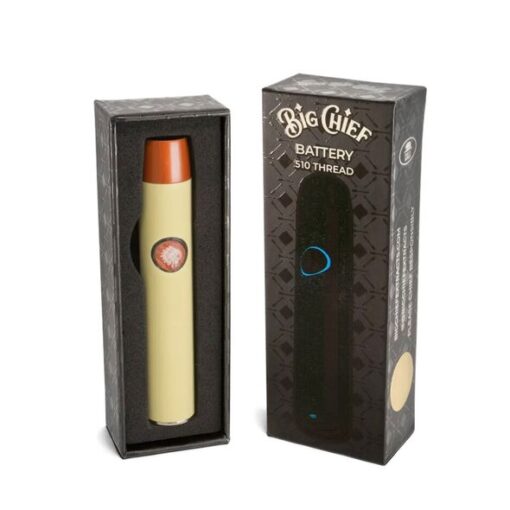
Official Big Chief 510 thread batteries in red, blue, black and cream. Preset in the voltage sweet spot for Big Chief carts, USB charging and pocket sized, verified authentic.
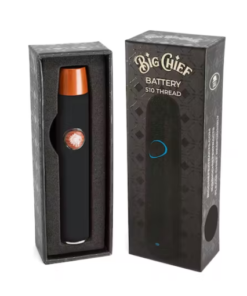
Big chief battery
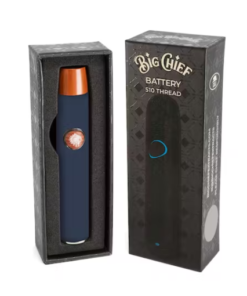
Big chief battery
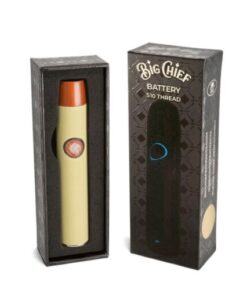
Big chief battery
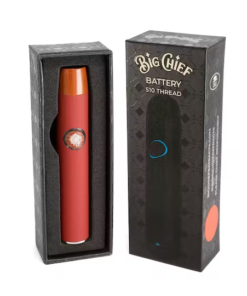
Big chief battery
On this page
- The Right Battery for Big Chief Carts
- Why Voltage Matters
- Pairs With Every 1g Cart We Sell
- What 510 thread actually means
- The four batteries stocked
- Voltage, and why it decides everything
- Charging habits that extend battery life
- When a battery seems to have failed
- Safety
- A battery and cartridge, or an all in one
- What separates a good 510 battery from a cheap one
- Carrying one safely
- Button batteries and draw activated batteries
- Using a preheat function
- How long a battery should last
- Big Chief Battery FAQ
The Right Battery for Big Chief Carts
A great cartridge on the wrong battery tastes burnt, clogs faster and dies mid session. The official Big Chief 510 thread battery is tuned for Big Chief oil: it runs in the 2.7 to 3.0 volt sweet spot that preserves terpenes instead of scorching them, and its draw activation means no buttons to fumble. Available in red, blue, black and cream, all with USB charging.
Why Voltage Matters
Distillate and live resin vaporize cleanly at low temperature. Push a cart past 3.3 volts and you trade flavor for burnt hits and wasted oil. That is the single most common mistake new cart users make, and the reason our how to use guide spends so much time on battery settings. This battery removes the guesswork because it ships preset where Big Chief carts perform best.
Pairs With Every 1g Cart We Sell
Any cartridge in the Big Chief vape carts collection screws straight onto this battery, from classic OG Kush to the 100 percent live resin line. Grab a spare so an empty battery never ends your night, or pick a second color to tell your carts apart.
What 510 thread actually means
510 is a thread standard, not a brand. The name comes from the original specification of ten threads over five millimetres, and it became the default connection for vape cartridges because it was open rather than proprietary. In practice it means any cartridge in this catalogue will screw onto any battery here, and onto most batteries you already own.
What is not standardised is everything else: voltage range, whether the battery is adjustable, how it charges, and how well it handles a thick oil. Those differences are why two batteries that fit the same cartridge can give very different results from it.
The four batteries stocked
This collection holds the same battery in four finishes: black, red, blue and cream. The choice is cosmetic rather than technical, so pick the one you will actually keep track of. Black is the most requested and the easiest to lose in a dark bag, which is worth a thought.
All four are matched to the cartridges in this catalogue, which means the voltage range they run sits where these oils vaporise properly rather than scorch.
Voltage, and why it decides everything
If one number determines whether a cartridge tastes good or tastes burnt, it is voltage. For the oils used across this range, between 2.7 and 3.0 volts is the working window.
Below that range the coil does not get hot enough to vaporise the oil properly. You get thin vapour, very little flavour, and a strong suspicion that the cartridge is faulty when it is not. Above it the oil starts to burn rather than vaporise. The flavour turns sharp and acrid, the vapour becomes harsh on the throat, and the cartridge empties noticeably faster because you are destroying oil rather than inhaling it.
Live resin and diamond products want the lower end of that window, closer to 2.7, because the terpenes that make them worth buying are the first thing high heat destroys. Standard distillate is more forgiving and sits happily around 3.0. The live resin range covers this in more detail.
Charging habits that extend battery life
These use a small lithium cell, and lithium cells age according to how they are treated rather than simply how old they are. Three habits make a measurable difference.
Do not leave one on charge overnight. Sitting at full charge for hours accelerates ageing, and a battery that lives on a cable will lose capacity within months. Unplug it when it is done.
Do not charge it cold. A battery brought in from a freezing car should reach room temperature before it goes on a cable, because charging a cold lithium cell causes permanent damage rather than temporary poor performance.
Do not run it completely flat repeatedly. Occasional full discharge is harmless, but habitually draining to zero shortens overall life. Topping up from around a quarter is kinder than running it dry every time.
When a battery seems to have failed
Most batteries brought back as faulty are not. Work through these in order before concluding yours has died.
First, check the contact plate where the cartridge sits. Oil seeps down over time and insulates the connection. A cotton bud with a little isopropyl alcohol, with the battery switched off, clears it in seconds and fixes the majority of no vapour complaints.
Second, check how tightly the cartridge is screwed in. Overtightening pushes the centre pin down so far that it no longer makes contact. Back it off a quarter turn and try again.
Third, confirm the battery is actually on. Most 510 batteries use five rapid clicks to switch on and off, and it is very easy to switch one off in a pocket without noticing.
If none of that helps, the not hitting checklist covers the cartridge side of the problem, and a clogged cartridge can look exactly like a dead battery.
Safety
Do not carry a bare battery loose in a pocket with keys or coins, which can short the contacts. Do not charge one unattended on a soft surface such as a bed. Use the cable supplied or a known good one rather than the cheapest available, since poor cables are the most common cause of charging faults.
When a battery reaches the end of its life it contains a lithium cell and must not go in household waste. Most local authorities and many supermarkets have a battery collection point. The CDC resource on e cigarette and vaping devices covers general device safety considerations.
A battery and cartridge, or an all in one
Buying a battery only makes sense if you plan to use cartridges regularly. The advantage is cost per gram and the freedom to change strain whenever you like. The disadvantage is one more thing to charge and keep track of.
If you would rather not think about hardware at all, the all in one devices include the battery in a sealed body and are thrown away together. Pair a battery here with anything from the cartridge range or the CBD cartridges, and verify anything you buy through the verification checker.
What separates a good 510 battery from a cheap one
Since every 510 battery fits every 510 cartridge, the differences are all in behaviour rather than fitting. Three things distinguish a battery worth keeping.
The first is a stable voltage under load. A cheap cell sags as it discharges, so the same cartridge that tasted right at full charge tastes thin at thirty percent. A good battery holds its output until it is genuinely low.
The second is the contact plate. A spring loaded or floating plate accommodates cartridges with slightly different pin depths, which is why one battery will run every cart you own and another will fail on half of them for no obvious reason.
The third is charge protection. A battery that stops charging when full, rather than trickling indefinitely, will still hold a useful charge a year later. This is the difference you cannot see at purchase and the one you notice most over time.
Carrying one safely
Detach the cartridge before putting a battery in a bag for any length of time. Left attached and jostled, the cartridge can loosen enough to break contact, or tighten enough to push the centre pin down permanently. Both are avoidable.
Never carry a battery loose among keys or coins. Metal across the contacts is how a small lithium cell becomes a fire, and it is the single most common cause of vape battery incidents. A pocket of its own, or the box it came in, is enough.
Button batteries and draw activated batteries
Two control styles exist. A button battery requires you to hold a fire button while drawing, which gives you control over exactly when the coil heats and lets you preheat a thick oil for a second before inhaling. A draw activated battery fires automatically when you inhale, which is simpler but gives you no way to preheat.
For distillate cartridges either works. For the thicker oils in the live resin range, a button is genuinely better, because a short press before drawing loosens the oil and prevents the weak first pull that gets misread as a faulty cartridge.
Using a preheat function
Many 510 batteries include a preheat mode, usually triggered by two rapid clicks. It runs the coil at a lower voltage for ten to fifteen seconds to warm the oil without vaporising it, and it is the correct answer to a cartridge that has been somewhere cold.
Use it sparingly. Preheating before every draw is unnecessary and shortens both battery life and cartridge life. Once at the start of a session, in cold weather, is enough.
How long a battery should last
Treated reasonably, a 510 battery of this type should give you a year or more of daily use before capacity drops noticeably. What kills them early is almost always charging behaviour rather than draw count: overnight charging, charging from cold, and cheap cables account for most early failures.
The first sign of a battery reaching the end is not that it stops working but that it runs down faster while still reporting full. If a battery that used to last a day now lasts an afternoon, that is the cell ageing rather than a fault with your cartridge.
Big Chief Battery FAQ
Does this battery fit other brands?
It fits any standard 510 thread cartridge, which covers nearly every cart on the market.
How long does a charge last?
A full charge covers a day or two of regular use. Charging back to full over USB takes under an hour.
Why does my cart taste burnt on another battery?
Almost always voltage set too high. Keep it between 2.7 and 3.0 volts, take slow three second draws, and let the coil rest between hits.
Will this fit cartridges from other brands?
If they are 510 thread, yes. That is the point of the standard. Performance will vary with the oil rather than the fitting.
How long does a charge last?
For most people a full charge covers a day or more of normal use. Heavy use or running at the top of the voltage range will drain it faster.
Is there any difference between the four colours?
No. Black, red, blue and cream are the same battery in different finishes. Choose on preference alone.
Why is my battery blinking when I draw on it?
Blinking usually signals either a low charge or a short circuit. Charge it first. If it still blinks with a cartridge attached, clean the contact plate and loosen the cartridge a quarter turn.