
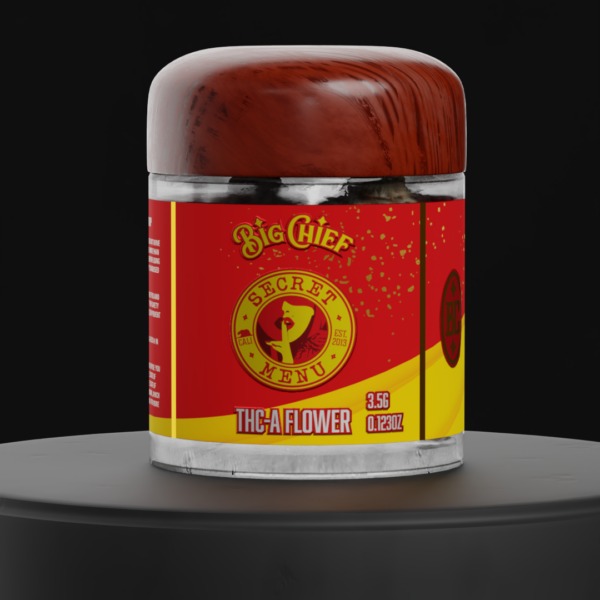
Big Chief flower is the whole plant side of the brand: sealed 3.5g THCa jars in the same house strains that fill the cartridges. Every jar is hand trimmed, factory sealed and labelled with the strain, batch and weight, so you can match it to a published lab result before you open it. Browse the current strain list below, and check the code on any jar against our verification page before you buy.
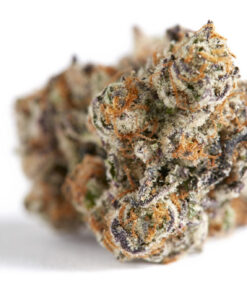
FLOWER
FLOWER
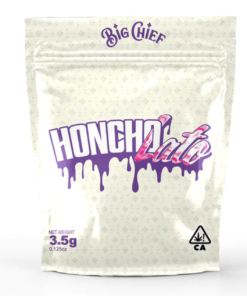
FLOWER

FLOWER

FLOWER
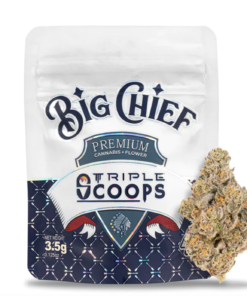
FLOWER

FLOWER
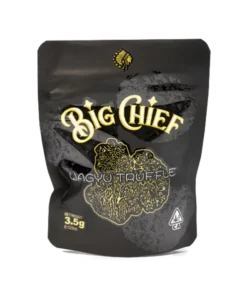
FLOWER
On this page
- Big Chief Flower: The Jars Behind the Carts
- House Strains You Will Not Find Elsewhere
- What Makes THCa Flower Different
- What THCA flower actually is
- The strains in this collection
- How flower compares with a cartridge
- Keeping a jar fresh after opening
- Judging a jar before you use it
- Lab testing on flower
- Related formats in this catalogue
- Strain by strain notes
- Preparing a jar properly
- Big Chief Flower FAQ
Big Chief Flower: The Jars Behind the Carts
The same genetics that fill Big Chief cartridges start here as whole flower. Every jar in this collection is factory sealed with the strain, batch and weight printed on the label, so what you smoke matches what you ordered. Jars ship in crush proof packaging and never sit in hot storage, because nothing ruins good flower faster than heat and light.
House Strains You Will Not Find Elsewhere
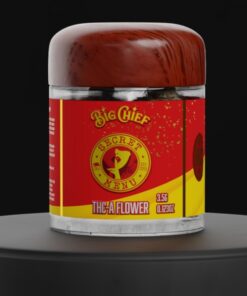
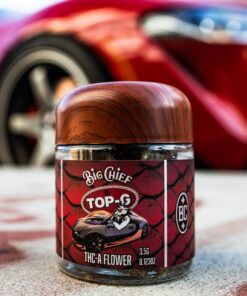
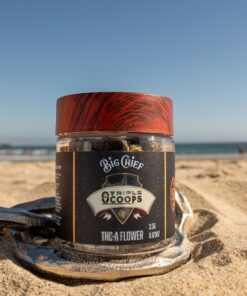
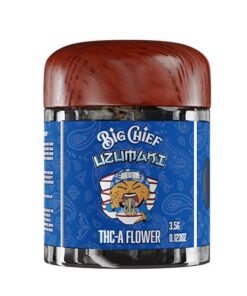
Big Chief grows its own lines rather than renaming someone else's harvest. Current jars include Top G, Secret Menu, Uzumaki, Triple Scoops and Wagyu Truffle, each a 3.5g jar of hand trimmed, slow cured flower. If you like a strain here, you can smoke it three ways: the jar itself, the matching pre roll packs, or the concentrate versions in the live resin collection.
What Makes THCa Flower Different
THCa is the raw, non psychoactive acid form of THC found in fresh flower. Apply heat and it converts, which means THCa flower smokes exactly like traditional high THC flower. It is the same plant chemistry every smoker already knows, just described accurately on the label. Our seller's guide explains the THCa question in plain language.
What THCA flower actually is
Every jar in this collection is THCA flower, and the distinction matters more than most shops explain. THCA is the acid form of THC that exists in the living plant. It is not intoxicating on its own. Applying heat converts it, which is why the same flower that tests as THCA on a lab report behaves like high THC cannabis once it meets a flame or a dry herb vaporiser.
The practical consequence is that potency figures on a THCA jar are not directly comparable to the THC figure on a cartridge. A jar testing in the mid twenties for THCA is a strong flower. Judge these by aroma, trichome coverage and how the flower breaks apart, not by chasing the highest number on the label.
The strains in this collection
Twelve options sit in this category, most of them in 3.5 gram jars. Uzumaki and Triple Scoops appear in both jar and loose form, and both lean sweet and dessert like. Secret Menu is the house rotation, which means the exact phenotype changes between batches, so treat it as a style rather than a fixed strain.
Gelato 42 and Gelatto 33 are the two most requested. They are related in lineage but not identical, and the numbering refers to the phenotype rather than potency. Honcholato and Mac Chief sit on the indica side and are the ones customers buy for the end of the day. Top G and Wagyu Truffle are the heavier, gassier end of the range, better suited to people who already smoke regularly.
How flower compares with a cartridge
People who move between formats notice three differences immediately.
| THCA flower | Vape cartridge | |
|---|---|---|
| Onset | Almost immediate, easy to judge | Almost immediate, easier to overshoot |
| Control over dose | High, you decide how much you grind | Lower, one long draw is a large dose |
| Flavour | Full terpene profile, changes as the bowl burns | Fixed profile, identical every time |
| Discretion | Low, the smell carries | High, dissipates quickly |
| Preparation | Grinder, papers or a vaporiser needed | None, screw on and draw |
Neither is better. Flower suits people who want to control the size of each session, and cartridges suit people who want the same experience every time with no setup. If you are moving from carts to flower, the grinders and rolling tray in this catalogue are the two things you will need on day one.
Keeping a jar fresh after opening
Flower degrades faster than any other format here, and it degrades in ways you can smell. Three things cause it: light, heat and the wrong humidity. Glass jars protect against light only if you keep them somewhere dark, so a cupboard beats a shelf. Warmth drives off the volatile terpenes that carry the aroma, which is why a jar left near a radiator smells like hay within a fortnight.
Humidity is the one most people get wrong. Too dry and the flower turns to dust when you grind it, losing both flavour and a good portion of what you paid for. Too damp and you risk mould, which is not a flavour problem but a health one. A two way humidity pack in the jar holds the range steady and costs very little. Never store flower in a refrigerator, where condensation cycles do more harm than the cold prevents.
Judging a jar before you use it
Open the jar and smell it first. Good flower smells like something specific: citrus, fuel, cake, pine. Flower that smells of nothing, or faintly of grass, has been sitting too long or was dried too aggressively. A sharp ammonia note means it was jarred before it finished drying and should not be smoked.
Then look at it in daylight. Trichomes should be visible as a frost across the surface rather than a few isolated patches. Break a piece apart with your fingers: it should be springy and slightly sticky, not crumble to powder and not squash like a sponge. Seeds and significant stem are signs of a rushed grow.
For independent guidance on the health considerations of inhaled cannabis products, the CDC page on cannabis health effects is a neutral starting point, and the FDA consumer update on vaping and THC covers the concentrate side.
Lab testing on flower
A flower COA reports slightly different things from a cartridge COA. Potency is given as THCA and delta 9 THC separately, and total THC is calculated from both. Beyond potency, the panels that matter are microbial contamination, mould and mycotoxins, pesticides and residual heavy metals from soil. Solvent testing is irrelevant here because no solvent is used to produce flower.
Batch reports for the jars in this collection are available on request through the contact page, and the lab results guide explains how to read each panel. If you want the broader picture of how this brand is counterfeited and how to confirm what you have is genuine, use the verification checker.
Related formats in this catalogue
If you like a strain here but would rather not roll anything, the pre rolls cover the same ground already prepared. The live resin concentrates are the closest thing to flower in terms of terpene retention, and the full flower guide goes deeper into house strains and how the secret menu rotation works.
Strain by strain notes
Uzumaki is the brightest option in the jar range and the one people reach for during the day. Triple Scoops is sweeter and creamier, closer to a dessert profile, and tends to be the one that converts people who normally find flower too harsh. Gelato 42 and Gelatto 33 share a lineage but not a phenotype: 42 is generally the sweeter of the two and 33 the more balanced.
Honcholato and Mac Chief sit firmly on the indica side. Both are heavier than the numbers suggest and both are evening flower rather than afternoon flower. Wagyu Truffle and Top G are the gassiest in the range, savoury rather than sweet, and are the two least suited to someone new to flower. Secret Menu rotates by batch, so treat it as a house selection rather than a fixed strain, and expect the profile to move between orders.
Preparing a jar properly
Flower rewards preparation in a way concentrates do not. Grind medium rather than fine: powder packs down, blocks airflow and makes a joint impossible to draw through, while material broken up by hand burns unevenly and runs down one side. Three or four turns in a metal grinder is usually enough.
Break up only what you are about to use. Ground flower loses aroma far faster than whole buds, because you have multiplied the exposed surface area. Everything you grind and do not use is worth less by the next session, which is the single most common way people waste a jar without noticing.
Big Chief Flower FAQ
How fresh is the flower?
Jars are sealed at packaging with a harvest batch on the label. We rotate stock constantly, and slow moving jars get pulled rather than sold stale.
How should I store my jar?
Keep it sealed in a cool, dark drawer. The jar blocks light better than a bag, but heat is still the enemy. Do not use the fridge, condensation invites mold.
Is this the same flower used in the pre rolls?
Yes. The classic 4 pack pre rolls are rolled from the same strain jars sold here.
How do I know the jar is authentic?
Same rule as the carts: verify the packaging before opening. Our authentication guide shows what genuine Big Chief packaging looks like this year.
Is THCA flower the same as regular cannabis?
Chemically it is the same plant. The difference is that it is sold in its unheated form, where the THC is still present as THCA. Heating it converts that to THC, so the experience of smoking or vaporising it is comparable to high THC cannabis.
How much is 3.5 grams in practice?
An eighth of an ounce, which is the standard jar size here. Depending on how you use it, that is roughly seven to ten sessions for most people, and rather fewer if you are sharing.
Can I use this in a dry herb vaporiser?
Yes, and many people prefer it. A vaporiser gives a cleaner flavour and uses less flower per session because nothing is lost to a burning ember. Grind it medium, not fine.
Why does the same strain smell different between jars?
Terpene profiles shift between harvests, even from identical genetics, because of growing conditions and cure time. Secret Menu is explicitly a rotating selection, so variation there is expected rather than a fault.