
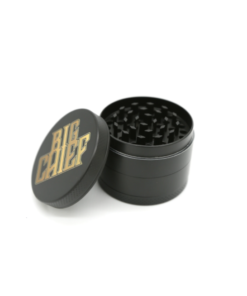
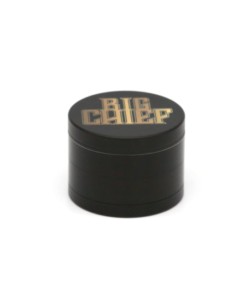
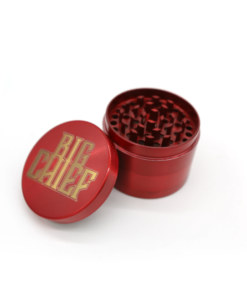
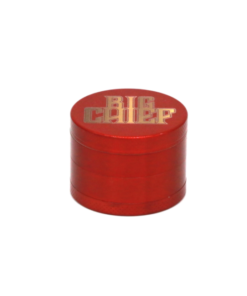
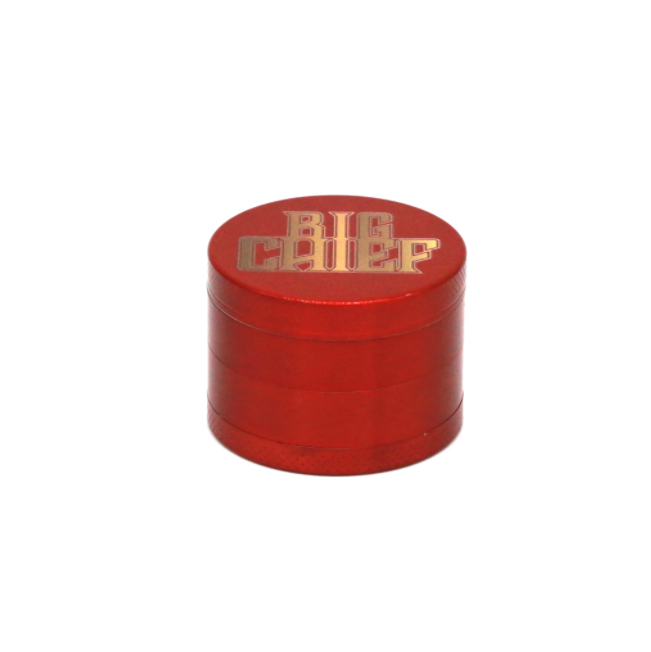
Official Big Chief grinders in red and black. Sharp teeth, smooth action and a proper kief catch, built to match the rest of your Big Chief setup.
BIG CHIEF GRINDERS
BIG CHIEF GRINDERS
On this page
- Big Chief Grinders: Small Tool, Big Difference
- Made for the Flower and Pre Roll Crowd
- Why grinding properly changes the result
- The two grinders stocked
- Getting the grind size right
- Keeping a grinder working
- What to pair it with
- Metal, acrylic and wood compared
- Getting the most from the kief chamber
- Using flower responsibly
- The parts of a four piece grinder
- If it jams or becomes stiff
- Looking after the kief screen
- What to do with collected kief
- Mistakes that cost you material
- Getting a consistent grind every time
- When a grinder is genuinely finished
- Buying once rather than repeatedly
- Choosing a size
- Big Chief Grinder FAQ
Big Chief Grinders: Small Tool, Big Difference
An even grind is the difference between a joint that burns smooth and one that canoes halfway through. The official Big Chief grinder uses sharp diamond cut teeth and a magnetic lid for a consistent fluffy grind, plus a screen and kief catch so nothing potent goes to waste. Available in red and black to match your Big Chief battery.
Made for the Flower and Pre Roll Crowd
If you buy from our THCa flower jars, a proper grinder is not optional. Breaking buds by hand wastes trichomes on your fingertips and burns unevenly. Grind it, roll it or pack it, and save the kief layer for when a session needs a boost. Pair it with the Big Chief rolling tray and you have the full desk setup.
Why grinding properly changes the result
A grinder looks like the least important thing you can buy here and it is quietly one of the most consequential. Flower broken up by hand burns unevenly, because dense clumps sit alongside loose fragments and the loose material burns away first. That is what causes a joint to run down one side, and what makes a bowl taste harsh halfway through.
An even grind gives an even burn, which means consistent airflow, consistent flavour and noticeably less waste. It also stops you losing material to your fingers, where the trichomes that carry both potency and aroma stick and stay.
The two grinders stocked
Two options sit here, black and red. They are the same grinder in different finishes, so the choice is cosmetic. Both are metal rather than acrylic, which matters more than the colour: acrylic teeth round off within weeks and the threads wear until the halves no longer align.
Getting the grind size right
Different formats want different grinds, and this is where most people go wrong.
| Use | Grind | Why |
|---|---|---|
| Rolling | Medium | Fine enough to roll evenly, coarse enough to keep airflow |
| Dry herb vaporiser | Medium to fine | More surface area for even heat, but not so fine it packs solid |
| Pipe or bowl | Coarse | Stops material pulling through the hole |
Over grinding is more common than under grinding. Powder packs down, blocks airflow and turns a joint into something you cannot draw through. Three or four full turns is usually enough.
Keeping a grinder working
Resin builds up on the teeth and threads, and a grinder that has become stiff to turn is dirty rather than broken. Take it apart and soak the pieces in isopropyl alcohol for half an hour, scrub the teeth with an old toothbrush, rinse thoroughly with warm water and let every part dry completely before reassembling. Doing this every couple of months keeps it turning smoothly for years.
Freezing a grinder for twenty minutes before cleaning makes the resin brittle and much easier to remove. If yours has a kief screen, empty it before you soak anything.
What to pair it with
A grinder is only useful if you are buying flower, so start with the THCA flower jars. A rolling tray is the natural companion, since it catches everything the grinder drops. If you would rather skip the preparation entirely, the pre rolls arrive ready to use.
Metal, acrylic and wood compared
Grinders are sold in three materials and only one of them is worth owning long term. Acrylic is the cheapest and fails fastest: the teeth round off within weeks, the threads strip, and the halves stop aligning. Wood looks better than it performs, because the grain absorbs resin and the teeth are usually pegs rather than cut edges, which tears flower rather than cutting it.
Metal, which is what the grinders here are, holds a cut edge, survives being dropped, and can be cleaned in solvent without damage. It is the only material where a grinder bought once is still working in five years.
Getting the most from the kief chamber
The bottom chamber collects kief, the loose trichomes that fall through the screen while you grind. It accumulates slowly, and most people forget it exists until it is half full.
Kief is considerably stronger than the flower it came from, because trichomes are where the cannabinoids and terpenes concentrate. Sprinkle a small amount onto a packed bowl or along a joint before rolling. Start with less than you think, because a heavy dusting turns an ordinary joint into something much stronger than intended.
Using flower responsibly
A grinder is a preparation tool, and everything it prepares is an intoxicant intended for adults aged 21 and over. Do not drive or operate machinery after use, keep flower and prepared material away from children and pets, and be aware that potency varies between strains and batches even when they look identical.
For neutral background on the health considerations of smoked cannabis, the CDC guidance on cannabis health effects is a reasonable starting point.
The parts of a four piece grinder
A four piece grinder has a lid, a grinding chamber, a collection chamber and a kief chamber beneath a fine screen. Material ground in the top falls through holes into the collection chamber, and the finest trichome dust continues through the screen into the bottom.
Two piece grinders skip the lower chambers entirely, which means you tip the whole thing out each time and lose the kief. The extra chambers are the reason a four piece is worth the small additional cost.
If it jams or becomes stiff
A grinder that suddenly needs force is almost always overpacked rather than broken. Empty it, remove any stem caught between the teeth, and refill it no more than two thirds full. Overfilling is the most common cause of a jam and the easiest to avoid.
If it is stiff even when empty, the threads are resined up and it needs cleaning. Twenty minutes in the freezer makes the residue brittle and much easier to remove before you soak it.
Looking after the kief screen
The screen between the collection chamber and the kief chamber is the part that fails first on any grinder, and it fails by clogging rather than tearing. Resin and fine plant material block the mesh until nothing passes through, at which point people assume the grinder has stopped producing kief.
Clean it with a soft brush from the underside rather than the top, so you push debris back out the way it came instead of driving it further in. Never poke at a screen with anything metal or rigid: a stretched or punctured mesh lets whole plant material through and the bottom chamber stops being kief and starts being dust.
What to do with collected kief
Once you have accumulated a reasonable amount, you have two options. The simple one is to use it loose, sprinkled onto a bowl or along a joint before rolling. The other is to press it, which compacts it into a solid disc that burns more slowly and evenly than loose powder.
Pressing needs nothing more than a small press or a coin and firm pressure. Warmth helps the resin bind, which is why pressing works better with kief that has been handled than with a chamber emptied straight from a cold grinder.
Mistakes that cost you material
Three habits waste more flower than anything else. Grinding more than you need, which leaves prepared material losing aroma between sessions. Overfilling the chamber, which jams the teeth and forces you to pick material out by hand, leaving trichomes on your fingers. And leaving the kief chamber unopened for so long that you forget it is there.
None of these are dramatic on any single occasion. Across a year they add up to a meaningful share of what you have bought from the flower range.
Getting a consistent grind every time
Consistency matters more than fineness, and the two are easy to confuse. A consistent grind means every piece is roughly the same size, so the whole thing burns at one rate. A fine grind means everything is small, which packs down and chokes the airflow whether it is consistent or not.
The way to get consistency is to stop turning while it still feels like there is resistance. Most people keep going until the grinder turns freely, which means everything has been reduced to the smallest size the teeth produce. Three or four turns, then check.
Load evenly around the teeth rather than dropping everything in the centre. Material piled in the middle sits above the teeth and never gets cut, which is why you sometimes open a grinder to find whole nuggets sitting on top of powder.
When a grinder is genuinely finished
Metal grinders rarely wear out; they get abandoned because they became unpleasant to use. Before replacing one, check three things. If it is stiff, it needs cleaning rather than replacing. If the halves do not sit flush, check for a trapped stem in the threads. If the teeth still have sharp edges, the grinder is fine.
The real end of life is a stripped thread or a stretched kief screen. A thread that no longer holds means the halves separate while you turn, and a punctured screen lets whole material through into the bottom chamber, which defeats the point of having one.
Buying once rather than repeatedly
A metal grinder is one of the few things in this catalogue you should expect to buy a single time. Kept clean and not overfilled, it will outlast every cartridge, jar and device you pair it with, which is why the small difference in price against a plastic one stops mattering within the first few months.
If you are assembling a setup from scratch, this is the item to spend on rather than economise on.
Choosing a size
Grinders come in a range of diameters and the right one depends on how much you prepare at once. A smaller grinder is easier to carry and quicker to clean but needs refilling constantly if you are preparing for more than one person. A larger one handles a full session in a single load and is less fiddly, but it is not something you slip into a pocket.
For most people preparing an eighth at a time from the flower jars, a medium grinder is the sensible middle ground.
Big Chief Grinder FAQ
How many pieces is the grinder?
Four pieces: lid, grinding chamber, screen chamber and kief catch at the bottom.
How do I clean it?
Freeze it for ten minutes, tap the resin loose, then scrub with isopropyl alcohol and rinse. Clean monthly if you grind daily.
Is there any difference between the black and red grinder?
Only the finish. Both are the same metal grinder, so pick whichever you prefer to look at.
How often should I clean it?
Every couple of months with regular use, or whenever it becomes stiff to turn. Stiffness is resin build up rather than a fault.
What is the bottom chamber for?
It collects kief, the loose trichomes that fall through the screen. It accumulates slowly and can be sprinkled onto a bowl or into a joint when you have enough.